F1 Trip Cost Benchmark 2026: 6 Race Weekends Compared
2026 Formula 1 season · Multiple Formula 1 destinations
Research dataset
Download the modeled data behind this benchmark
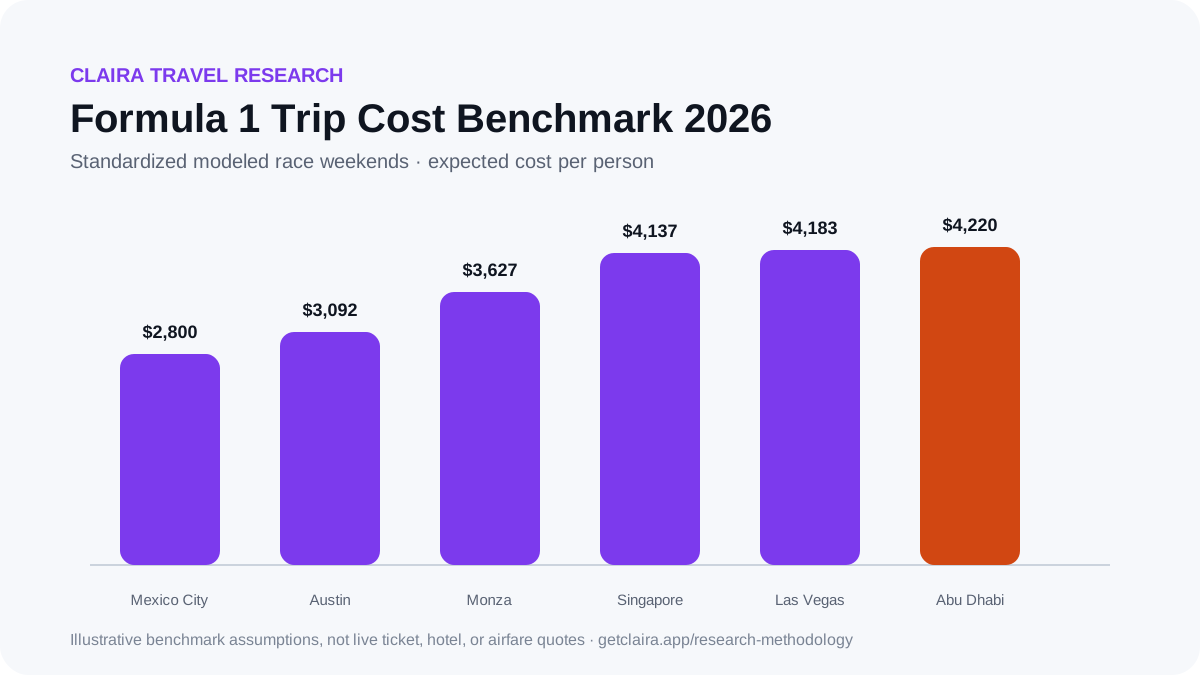
The six standardized Formula 1 group-trip scenarios used in Claira's 2026 benchmark, including modeled trip length, headcount, expected per-person cost, sensitivity range, and one-person dropout impact.
Standardized modeled planning scenarios only. These files are not live prices, customer-trip data, market averages, observed cancellation statistics, or forecasts.
Formula 1 travel can be deceptively hard to budget because tickets, race-week hotels, local transport, flights, dining, and nightlife all rise or fall together. A city with cheaper everyday travel can still become expensive during Grand Prix weekend, while a premium destination can occasionally work if the group controls lodging and extras.
Claira modeled six remaining 2026 race trips with one consistent cost framework. These are standardized planning assumptions—not live inventory, ticket quotes, forecasts, or recommended spend.
The benchmark
| Race destination | Modeled trip | Expected per person | Sensitivity range | One-person dropout impact |
|---|---|---|---|---|
| Mexico City | 4 nights / 6 travelers | $2,800 | $2,428–$3,405 | +$190 |
| Austin | 4 nights / 6 travelers | $3,092 | $2,682–$3,755 | +$218 |
| Monza / Milan | 5 nights / 6 travelers | $3,627 | $3,144–$4,412 | +$243 |
| Singapore | 5 nights / 6 travelers | $4,137 | $3,582–$5,039 | +$263 |
| Las Vegas | 4 nights / 6 travelers | $4,183 | $3,630–$5,081 | +$297 |
| Abu Dhabi | 5 nights / 6 travelers | $4,220 | $3,657–$5,135 | +$280 |
What the model includes
Each race uses rounded example assumptions for:
- airfare per traveler
- total hotel/lodging cost
- shared local transport
- food per traveler per day
- non-race activities
- a shared race-ticket / premium-event cost bucket
- nightlife or entertainment spend
- other shared expenses
The sensitivity range changes both fixed and variable assumptions to show how quickly a weekend can move. The dropout case shows how fixed shared costs redistribute if one traveler exits after the group has already committed.
These figures should never replace live tickets, hotel inventory, airfare, or local transport quotes.
Mexico City: lowest modeled cost
Mexico City comes in lowest at $2,800 per person in our standardized scenario. The example assumes lower lodging, food, transport, and race-premium costs than the other five destinations.
That makes Mexico City interesting for groups that want an international F1 weekend without automatically moving into the Singapore, Las Vegas, or Abu Dhabi budget tier.
The broader city also gives the group a lot to do outside race sessions, which makes the trip easier to justify for travelers who are not equally invested in Formula 1.
Austin: mid-range modeled cost with a simpler domestic setup
Austin models at $3,092 per person, placing it above Mexico City and below the four higher-cost scenarios in this standardized set. For U.S.-based groups, the domestic setting may simplify some travel logistics, but the right tradeoff depends on each group's origins, race priorities, and live trip costs.
The main logistical risk is transport to Circuit of the Americas. The group should lock that plan early and avoid assuming normal road times.
Compare Austin vs Las Vegas for groups.
Monza / Milan: international trip without the highest premium
The standardized Monza/Milan case lands at $3,627 per person for five nights. The model reflects longer-haul airfare and a dedicated race-transport requirement while keeping hotel and entertainment assumptions below the most premium late-season races.
This is also a trip where the city and circuit are separate planning problems: Milan is the hotel/nightlife base; Monza is the event-day movement problem.
Singapore, Las Vegas, and Abu Dhabi: three different premium models
Singapore models at $4,137, Las Vegas at $4,183, and Abu Dhabi at $4,220 per person.
The totals are close, but the structure differs:
- Singapore carries long-haul airfare and race-week city lodging, but the street-circuit geography can reduce local transport complexity.
- Las Vegas carries the highest modeled shared fixed cost in this set, reflecting premium Strip lodging and race/event spending.
- Abu Dhabi combines long-haul airfare, premium lodging, race spending, and the possibility of resort-style extras.
Compare Singapore vs Abu Dhabi.
The F1 dropout tax
Grand Prix trips can punish uncertain headcount because some of the most expensive categories are fixed or prepaid.
In this model, losing one traveler increases the remaining travelers' expected cost by approximately:
- Mexico City: $190 each
- Austin: $218 each
- Monza / Milan: $243 each
- Singapore: $263 each
- Abu Dhabi: $280 each
- Las Vegas: $297 each
Las Vegas has the largest modeled dropout impact because the example has the greatest fixed shared-cost exposure.
The planning lesson is simple: do not make premium lodging affordable only because tentative travelers are included in the split.
How to use the benchmark
- Choose two races the group would genuinely attend.
- Replace airfare with actual routes from each home city.
- Price hotel configurations at the committed headcount.
- Separate race tickets from optional hospitality upgrades.
- Add the real official/authorized transport plan.
- Stress-test the cost with one traveler removed.
- Compare cost against destination fit—not cost alone.
Our takeaway
In this standardized set, Mexico City has the lowest modeled per-person cost, while Austin is the next-lowest scenario. Singapore, Las Vegas, and Abu Dhabi cluster at the higher-cost end, with Las Vegas carrying the largest modeled one-person dropout impact. Use those modeled differences as planning context, then compare live airfare, lodging, tickets, transport, and the group's destination priorities before choosing a race.
Start with the 2026 F1 travel guide, then compare the individual race guides before booking.
All figures are illustrative Claira planning assumptions, not live prices, ticket quotes, forecasts, or guarantees. Formula 1 schedules and event details can change. Confirm race dates, tickets, hotels, transport, and local rules with official sources before booking.